Category: Autumn Straus

  • Reimagining Fashion: A Graduate Student’s Insight Into Sustainable Fashion

    Reimagining Fashion: A Graduate Student’s Insight Into Sustainable Fashion

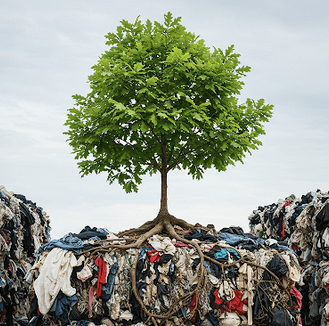
    Ashley Kemper is a graduate student at the University of Oregon, focusing on the intersection of fashion, sustainability, and environmental justice. With a background in fine art and years of experience as an Assistant Costume Designer, Kemper witnessed firsthand the unsustainable practices of the fashion industry. Her research aims to tackle the growing issue of textile waste and hold corporations accountable for their role in global pollution and inequality. Through her research, she is exploring how policies and consumer behaviors can reshape the industry to minimize waste, protect vulnerable communities, and promote ethical practices.

    Fashion Waste and Accountability

    At the core of Kemper’s research is the issue of fast fashion. Kemper says that “a large amount of our donated clothing that doesn’t get resold domestically, gets shipped and sold abroad,  mostly to developing nations that do not have the infrastructure to deal with low quality garments that they can’t resell. This contributes to severe environmental justice inequities and contributes to pollution, human health problems, and ecosystem devastation.” She emphasizes that the U.S. and other Global North nations must take ownership of their waste, rather than exporting it. She says that, “We need to be responsible for our own waste problem, not put the burden on developing nations.”

    This is why she is investigating Extended Producer Responsibility (EPR) policies, like California’s SB 707, which was passed in 2023 to address textile waste by holding brands accountable for the end-of-life management of their products. Kemper says, “This policy holds producers accountable by requiring brands that sell in the state to pay fees into a program that will fund better infrastructure for repair, reuse and textile recycling throughout the state.”

    Environmental Justice in Fashion

    The fast fashion industry disproportionately affects communities in developing nations, where cheap labor is exploited in garment factories. Kemper emphasized in her responses that the majority of garment workers are women who often face unsafe working conditions and are paid far below a living wage.

    “There is a lot of work to be done here yet to demand better equity in this industry for these highly valuable skilled workers,” says Kemper.

    The Sustainability Challenges in Fashion

    When asked about the biggest challenges facing the fashion industry today, Kemper identifies a critical lack of brand transparency and the regulatory framework to enforce accountability. 

    Despite these obstacles, Kemper sees some promising developments, particularly with policies like SB 707, The European Union’s push for a Digital Product Passport (DPP) for textiles, and the Garment Worker Protection Act represent significant steps toward a more sustainable future.

    Rethinking Sustainable Fashion

    One of the most common misconceptions about sustainable fashion, according to Kemper, is the idea that people must only buy from eco-friendly or “sustainable” fashion brands. These brands are often more expensive and this mindset overlooks the deeper issue of overconsumption.

    Kemper says, “I think our culture of constant consumption really needs to change in order to make the biggest impact. Spending just a little bit more on our clothes and buying new ones less frequently, repaired our clothes more often, prioritized shopping second hand, swapped clothes and upcycled older fashions, is the best approach in decreasing our reliance on buying new and living the most sustainable fashion lifestyle.”

    Shifting consumer behaviors and attitudes away from consumer culture is an important step in enacting real change.

    Taking Action

    For those looking to get involved in sustainable fashion or environmental justice, Kemper advises students and professionals to start by asking questions. Researching brands’ sustainability reports, following watchdog groups like Remake and Fashion Revolution, and using your voice as a consumer to demand better from companies.

    If you want to know more about what your favorite brands are doing as far as sustainability goes, publicly traded companies publish sustainability reports every year. Kemper recommends checking out Remake’s Report, or Fashion Revolution’s Fasion Transparency Index.

    To learn Kemper says that her “exhibition in the spring will touch on these issues.” Go support Spring Term, week 8, Foyer Gallery in Lawrence Hall.

    To get in contact with Kemper you can reach her hear akem@uoregon.edu

  • 3 Sustainable Fashion Influencers: Everyone Who Loves Fashion and is Passionate About Sustainability Should Follow

    3 Sustainable Fashion Influencers: Everyone Who Loves Fashion and is Passionate About Sustainability Should Follow

    1. Venetia La Manna (@venetialamanna)

    Venetia is sharp, witty and an activist. She exposes the dark side of fast fashion on her social media. She informs her followers of important stats like the industry’s 1.2 billion jeans sold annually. Her chic aesthetic proves sustainability doesn’t mean sacrificing style. Perfect for people who care about social justice and want to call out greenwashing.

    2. Alex (@alexochoasuo)

    Co-founder of Shine By Nature, Alex redefines sustainable fashion that’s made for anyone. Her feed bursts with colorful vintage overalls, gingham tops, and retro-inspired looks, proving eco-friendly fashion isn’t one-size-fits-all. Follow her for inclusive thrifting hacks and body-positivity.

    3. Tracy (@transformationsbytracy)

    With 850K followers, Tracy is an upcycling legend. Her TikTok tutorials turn thrifted finds into glamorous satin dresses and corset tops, paired with sewing lessons and Etsy patterns. If you love DIY projects, her content is a masterclass in extending wardrobe life without buying new.

    These blend trend-driven style with actionable advice. They provide thrifting tips and DIY hacks, while addressing inclusivity and activism. Their platforms empower young audiences to make sustainable choices without sacrificing personal style.

  • Break Down of Sustainable Fashion: How These Infographics Represent Information to Make You Understand

    Break Down of Sustainable Fashion: How These Infographics Represent Information to Make You Understand

    I’ve spent a lot of time looking into sustainable fashion. Learning about the history of this industry and the future of it. For me, it’s always exciting to come across infographics that can give me good insight into what I want to learn about in an easily understandable way. Both of the infographics I’ll be talking about in this post are effective in their ability to communicate important information. Through a combination of graphics, color choices and the balance of text and visuals, these infographics are engaging and provide data in an accessible and compelling way.

    Visual Hierarchy and Organization

    The visual hierarchy in both infographics is clear and well-organized. The first infographic, “The Price of Fashion Beyond the Tag,” uses images and data points to emphasize key statistics that highlight the environmental cost of the fashion industry. Each section presents data and leads the viewer from one impact to the next in a logical flow. The use of contrasting image sizes, placement, and layout directs your eye to the most important facts first. This ensures the message that the fashion industry has a large toll on the environment is conveyed.

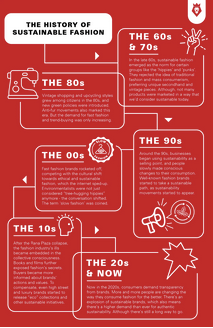
    In the second infographic, which covers the history of sustainable fashion, the timeline layout offers a straightforward way to present a complex history. By dividing the history into decades with short summaries for each period, the infographic ensures that the information is digestible and organized chronologically. This structure helps the viewer easily grasp the key milestones in the movement toward sustainability within fashion.

    Color Choices and Their Impact

    Color choices play a significant role in both infographics. In the first, focusing on the fashion industry’s environmental impact, they stuck with earthy tones. The use of greens, blues and whites represented the earth. Along with this the muted colors like gray and black represent the negative effects of industrialization. For the second infographic, the color palette leans toward more neutral or vintage colors to represent the past.

    Typography and Readability

    Both have clean fonts that allow for easy readability. In the first infographic, short, impactful statements are paired with statistics, using bolder typography for the more important pieces of data. In the second infographic, the timeline format allows for a mix of small but legible text that offers concise explanations of each decade’s significance. The typography is uniform and simple enough to allow the viewer to focus on the story being told.

    Telling a Story with Data

    Both infographics tell a story with data. In the first infographic, the data is presented in a way that underscores the harmful environmental impact of the fashion industry. The images paired with statistics create an emotional appeal, helping you to understand the severity of the issue and encouraging you to consider your own consumption habits.

    The second infographic, with its timeline structure, tells a story of progress in sustainable fashion. This format allows you to see the broader trajectory of change, making the information informative and inspiring.

    https://pomp.store/blogs/journal/the-history-of-sustainable-fashion

  • The Power of Fashion Microtrends: How They Affect Us and The Planet

    The Power of Fashion Microtrends: How They Affect Us and The Planet

    Fashion microtrends are more and more common with the rise of social media. TikTok and Instagram fuel rapid trend cycles. They perpetuate buying new clothes for every new season. While these fleeting trends may seem harmless, they have a real impact on our planet.

    Microtrends are ultra-fast fashion cycles that can rise and fall within months or weeks. These trends are driven by social media, influencers and fast fashion brands. They encourage constant consumption of new styles. According to recent data, 39% of Gen Z consumers are directly influenced to purchase items they see on TikTok.

    Environmental Impact:

    The rapid turnover of microtrends is fueling an unsustainable cycle of production and waste:

    Carbon Emissions: The fashion industry accounts for up to 10% of global carbon dioxide output, surpassing international flights and shipping combined.

    Microplastic Pollution: Many fast fashion items are made from synthetic materials that break down into microplastics, harming marine life and potentially ending up in our drinking water.

    The Human Cost: Beyond environmental damage, the fast fashion industry often relies on exploitative labor practices to keep prices low and production speeds high. Workers in countries like India and Turkey often earn only a third of a livable wage.

    Young consumers can break free from the microtrend cycle by adopting more sustainable fashion habits:

    1. Build a Capsule Wardrobe: Focus on versatile, high-quality pieces that can be mixed and matched for various occasions.
    2. Shop Second-hand: Thrift stores and online resale platforms offer unique finds without the environmental impact of new production.
    3. Support Sustainable Brands: Look for companies using eco-friendly materials and ethical production practices.
    4. Repair and Upcycle: Learn basic mending skills to extend the life of your clothing.
    5. Quality Over Quantity: Invest in well-made pieces that will last for years rather than disposable trend items.

    By making conscious choices about our fashion consumption, we can reduce waste, lower our carbon footprint, and develop a personal style that lasts. Style is about expressing yourself, not following every trend. As we become more aware of fashion’s impact on the planet, we can embrace a slower, more thoughtful approach to our wardrobes.

  • Thrifting In Eugene: Favorite Spots and Hidden Gems In Track City

    Thrifting In Eugene: Favorite Spots and Hidden Gems In Track City

    If you’re a student at The University of Oregon and like to thrift this guide is for you. It can be hard to choose where to shop, especially if you don’t know what you’re looking for. One of the best parts about thrift stores is that there’s new stuff every time you go. Having a usual thrift spot is great but it can also be fun to explore new places.

    Close To Campus: Since transportation isn’t always accessible for college students here are some options closer to campus. Ghost Town Outfitters is a locally owned thrift store. It’s also a close walk from campus straight down 13th St. Just a couple blocks down from there is Eugene Jeans. This is another locally owned thrift store with plenty of cool pieces.

    Worth The Ride: If you have the chance to take a car, bus, or even bike, here are a couple of great options that are worth the travel time. Located in the Springfield area The Vintage Industry is a collection of vendors that each have a section of the store. Making each corner of the store uniquely curated. There’s a mix of furniture, clothing and decor. The Racks is a laid-back, sustainable vintage store. From clothing to accessories, it’s the perfect spot for unique items.

    Old Standbys: In my opinion, some of the best clothes can be found in the bigger thrift stores. Usually, prices are lower at the bigger donation centers. There is also a wider variety of clothes so you’re more likely to find something that fits your style perfectly. GoodWill and St. Vinnies are two of my favorite spots in the city. There are a couple of locations for both of these in The Eugene Springfield area and they all have a lot to offer.

    Whether you’re looking for vintage clothing, budget-friendly finds, or even home decor and furniture, Eugene’s diverse thrift scene has something for everyone. From large, community-driven stores to smaller vintage boutiques, have fun exploring some of the best spots in Eugene for thrift shopping.

  • A Provocative Ad: How Patagonia Markets Through Activism

    A Provocative Ad: How Patagonia Markets Through Activism

    If you like to hike, snowboard, ski, or spend time outside, maybe you’ve invested in some clothing from Patagonia. This brand “is a designer of outdoor clothing and gear for silent sports.” But Patagonia’s only goal isn’t just to sell clothes. They place a huge emphasis on environmental activism.

    This can be seen through the social media content that they post. They don’t use marketing to promote their products, instead, they use it to raise awareness of social and environmental issues to their followers.

    Patagonia is all about standing up for what they believe in. An example of this is when they boycotted Facebook in 2020. Stopping all paid advertisements on the platform. This decision came about because of climate change misinformation being spread on the platform. Patagonia was pushing for Facebook to prioritize the environment and people over their profits. They were also willing to lose money for the goal of standing up for what they thought was right.

    Another area that Patagonia strives to focus on is education. They want their customers to be informed of the issues that they find important. One of their recent Instagram posts includes Dr. Ayana Elizabeth Johnson, a climate activist, talking about the need for coastal ecosystem protection. Most of their social media includes educational information. Patagonia mostly talks about their clothing when they’re educating their consumers on their manufacturing process.

    This brand works hard to take a genuine approach to its marketing. They are honest with their audience and they strive to create a community. One way they do this is by supporting the work of over 1200 environmental nonprofits, often through their social media.

    So why does this type of advertising work for them? They are marketing their products through their activism. They are also demonstrating their motives for what they do. On social media actions influence people more than words do. This creates a strong community of followers. As well as creating brand loyalty.

    More and more consumers are placing an emphasis on how their values align with brands when choosing where to make purchases from. This explains the growth that Patagonia continues to have through its marketing campaigns and activism-oriented business.


    To learn more about the thought process behind Patagonia’s digital marketing listen to this podcast. Where ​​Scott Carrington, leader of media and advocacy at Patagonia, talks about how and why they conduct their social media the way they do.

  • Thrift Guide: How to Shop Sustainably On a Budget

    Thrift Guide: How to Shop Sustainably On a Budget

    Thrifting isn’t only about finding cool clothes. It’s a way to reduce waste, shop sustainably and build your unique wardrobe. Read more about how thrifting helps the environment here. It’s usually a fun hobby but it can also be stressful. I find it a little overwhelming whenever I walk into a thrift store. There’s so much to look at and it takes time to sift through everything until you find what you’re looking for. This guide is here to help make thrifting a little easier and a little less stressful.

    1) Know What You’re Looking For

    Something that keeps me from getting overwhelmed is having a vision of what I’m looking for before I go to the store. Write down a list of items you might need or create a vision board of the aesthetic you’re going for. This can keep you from buying items you might not need. If you have a general idea of what you’re looking for it’ll save you time when looking through clothes.

    2) Think Before You Buy

    It’s easy to want to buy everything you come across in a thrift store. Just because it’s cheap doesn’t mean you need to buy it. Overconsumption can still happen even if you’re shopping second-hand. It’s important to not get carried away. Try asking yourself if you’re gonna regularly wear what you’re buying, if you’re gonna keep it for over a year, and if you would buy it if it wasn’t at a second-hand price. After asking these questions you should have a better idea of what items to buy and which to leave for someone else.

    3) Figure Out Your Favorite Spots

    There are tons of different thrift stores out there. There’s no harm in trying new ones but it’ll save you some time if you have some favorite go-to spots. Get recommendations from friends or look online. When you try a new store make note of which ones fit your style and which ones you don’t find much at. Don’t discount online thrifting too. You can’t try stuff on but there are definitely good finds to be found.

    4) Inspect Inspect Inspect

    Make sure to check for stains, holes, broken zippers and tears before you buy your clothes. Sometimes these issues are fixable but if you aren’t gonna fix it, or find someone to fix it then don’t bother buying it. Getting home and realizing something you bought is damaged is usually sad, especially because most thrift store purchases are nonrefundable.

    5) Have Fun

    It should be fun! Don’t get discouraged if you don’t find anything good. It’s okay to leave empty-handed some days and it’s okay to find a hall on other days. Thrifting is fun, a great way to learn about your style and a great way to lessen your consumption.

    Check out @kalitaku on TikTok for some in-depth thrift guide videos.

  • Sustainable Equals Fashionable: How The Push Towards Buying Green Has Changed The Trends

    Sustainable Equals Fashionable: How The Push Towards Buying Green Has Changed The Trends

    Sustainable fashion is the opposite of how the majority of clothing companies operate. In recent years, people have started to look down on fast fashion. The harm that the clothing industry causes is a good reason that many people opt not to buy from brands like H&M and Shein anymore. Young people are pushing for more ethical, eco-friendly options.

    Online and off the younger generation has been having more conversations about the devastation buying tons of clothing can cause. Buying more sustainably is a growing trend in recent years. In an article from The Seattle Times, it’s said that “83% of Gen Z is willing to shop thrifted goods and revenue in the global second hand market has increased by more than a third.” Gen Z still loves to buy things but it is easier than ever to rebuy something old over purchasing something new. Online stores where people can buy and sell like Depop and Facebook Marketplace give people the chance to buy second-hand online. Along with this, there are more thrift stores every day.

    Purchasing second-hand isn’t just good for the environment but it’s on trend. Vintage clothing being trendy is a good example of how the push for environmental consciousness has become a trend. It’s cool to have old unique clothes and they also come with a story. You get to say “I found my jeans in a vintage store on a corner when I visited New York City,” “This was my mom’s dress in the early 2000s,” or “I bought this jacket from a sweet old lady on Facebook Marketplace.” This blog post does a good job of describing why having a story behind your clothes can be such a good thing.

    There’s a culture around repurposing clothing. It has changed the way a lot of people see fashion. Trends are circular and they’re always going in and out of style but you can still wear those jeans from the 80s and style them in a way that’s on trend for today. There are still tons of trends that quickly go in and out of style. One trend that is growing and likely sticking around is buying clothes that you can wear for a long time. This includes buying clothes that you think you’ll like for a long time and buying clothes that will last. Sustainably made clothing is often more expensive but it’s becoming more popular and part of that is because investing in quality pieces is becoming more popular.

    Social media plays a big role in changing trends. People can learn where to buy second-hand on social media and they can take inspiration from others on how to style their clothes. The mix of technology and awareness when it comes to the harm overconsumption brings is leading us in a bright direction. People are more willing to change their purchasing habits.

  • Gen Z Involved: How Collective Fashion Justice Empowers Young Advocates for Ethical Fashion

    Gen Z Involved: How Collective Fashion Justice Empowers Young Advocates for Ethical Fashion

    In a world where short-form content has become the norm, it can be difficult to get people to focus on something for much longer than 60 seconds. Collective Fashion Justice has used this to their advantage on its social media. Getting Gen Z to care isn’t hard, but getting them to engage is where things get more difficult.

    Collective Fashion Justice works hard to empower young advocates for ethical fashion through its social media channels. The company has 46.3K Instagram followers and 14K TikTok followers. Through these social media platforms, it has gotten the opportunity to connect with young people and get them interested, educated and engaged. It posts Instagram Reels and TikTok videos that catch people’s attention. These videos show important issues surrounding fashion and the power we have as consumers when we choose to purchase something.

    Another way this business connects with future industry leaders is through universities. On the website, it states that “Collective Fashion Justice believes that to create a fashion industry prioritizing the planet and life on it before profit, we must engage with young people who will shape fashion’s future.” The company connects with fashion schools across Europe and North America to implement discussions surrounding sustainable fashion practices. This is done through conducting info sessions, professional lectures and engaging readings at the universities.

    The website includes resources on ways to get involved, materials to read, places to donate and ways to connect with others who care about sustainable fashion. Through the company’s social media, educational resources and wide reach they have been able to make changes all over the world. A few of these include banning wild animal skins and fur from London Fashion Week, banning all wildlife material from Berlin Fashion Week, creating a NewYork City task force working towards ending the purchasing of fossil fuels and animal materials and many more you can read about here.

    The combination of short-form content and meaningful ways to get engaged is important and effective for a company like Collective Fashion Justice. Nonprofits should learn from this company. Having vast strategies that are done well is an important factor in making big changes in the world.

  • Threads of Change: Buying and Selling More Sustainably

    Threads of Change: Buying and Selling More Sustainably

    As someone who likes clothes as much as I do, I don’t like thinking about how much waste the clothing industry produces. Addressing this issue is important, especially as we think about our future. The fashion industry is at a crossroads, with sustainability becoming not just a trend but a necessity for consumers and businesses.

    I want to do a deep dive into environmental issues surrounding the fashion industry on a personal and industry level. The path to sustainable fashion on an individual level can be found through thrifting and upcycling. Thriftng has become popular among younger generations. Secondhand finds are often staple pieces for a wardrobe. Clothing you find at thrift stores can rival fast-fashion purchases. Some people thrift instead of buying brand new clothes and some people take thrifting to the next level by upcycling thrifted clothing to fit their style better.

    This practice not only promotes ethical wardrobes but also reduces carbon emissions and keeps clothes out of landfills. By embracing thrifting consumers can express their style while contributing to a more circular fashion economy. Apps and social media platforms have made it easier than ever to buy, sell and trade garments.

    For professionals in the fashion industry sustainability is becoming key to success, innovation and brand individuality. The sustainable fashion market has a growth rate of 9.49% and is expected to reach $19.03 billion by 2032. Innovation and consumer preferences are driving forces in the rapidly growing industry.

    The intersection between personal choices and industry trends is shaping how fashion is evolving. I want to explore this evolution by taking a closer look at what choices we can make on a personal level, what trends are influencing change, the turn away from fast fashion and what industries are doing to change for the future and their success.